

In today's digital-first world, a seamless online booking experience is no longer a luxury; it's an expectation.
A restaurant booking app is the engine that powers this experience, working 24/7 to turn website visitors and social media followers into confirmed diners. Choosing the right system is a critical decision that impacts your operational efficiency, guest data, and ultimately, your bottom line.
This guide provides a comprehensive comparison of the best restaurant booking apps available for UK venues, helping you select the perfect partner for your business.
What Is a Restaurant Booking App?
Definition & Core Purpose
A restaurant booking app, or reservation system, is a software solution designed to manage online reservations, table allocation, and guest communications. Its core purpose is to automate and streamline the entire booking process, reducing no-shows and providing valuable data to improve service.
How It Works for Diners & Teams
The process creates a smooth journey for everyone involved:
- For Diners: They discover your restaurant, check real-time table availability on your website or a marketplace, make a booking in seconds, and receive instant confirmation.
- For Your Team: The system automatically accepts the booking, allocates a table based on your rules, sends reminders to the guest, and adds their details to your CRM, allowing your team to welcome them with all the necessary information.
Benefits for UK Restaurants
More Bookings, Fewer No-Shows
The primary benefit is capturing more revenue. By taking bookings 24/7, you never miss an opportunity. Modern apps provide powerful tools to combat no-shows, such as taking deposits, implementing card verification, sending automated reminder messages, and managing a digital waitlist to fill last-minute cancellations.
Operational Efficiency
A booking app brings order to a busy service. Digital table management allows you to visualise your floor plan, control the pacing of arrivals to avoid overwhelming the kitchen, and see shift coverage at a glance.
Service notes and guest tags ensure your team is always prepared, leading to a smoother, more professional operation.
Guest Data & Marketing
Every booking provides valuable data. A GDPR-ready system allows you to build detailed guest profiles, tag regulars and VIPs, and securely collect consent for email or SMS marketing. This data is a goldmine for building loyalty, encouraging positive reviews, and driving repeat business.
Key Features to Look For
Reservations & Table Management
Look for a dynamic floor plan, control over booking pace, and the ability to manage walk-ins and a digital waitlist. For growing businesses, multi-venue support from a single dashboard is a key feature.
Payments & Deposits
This is essential for no-show protection. The app should offer secure card capture, options for prepayment, and customisable no-show policies. For the UK market, ensure it is fully compliant with SCA/PSD2 payment regulations.
Marketing & Visibility
Does the app help you attract new customers? Look for features like marketplace reach, integrations with Google Reserve and Instagram, and built-in promotional tools to help you fill empty tables during quieter periods.
Integrations & Ecosystem
The app should work seamlessly with your other tools. Key integrations to look for include connections to your POS system, Property Management Systems (PMS) for hotels, and voucher platforms. An open API or Zapier integration offers maximum flexibility.
Reporting & Analytics
Data is crucial for growth. The system should provide clear reports on key metrics like covers per service, RevPASH (Revenue Per Available Seat Hour), no-show rates, and campaign attribution to show you where your bookings are coming from.
Compliance & Support
Ensure the app is fully GDPR compliant and handles payment data according to PCI standards. Look for UK-based support with accessible hours. The ability to easily export your guest data is also a critical feature for data portability.
Pricing Models Explained
Subscription vs. Per-Cover Fees
- Subscription: A flat monthly or annual fee, offering predictable costs regardless of booking volume. This is often better for high-volume restaurants.
- Per-Cover: A fee charged for each diner booked through the platform. This model can have a lower entry cost, but can become expensive as you get busier.
- Hybrid Models: Some platforms combine a subscription fee with per-cover charges for bookings generated through their marketplace.
Total Cost of Ownership Checklist
Look beyond the advertised price. Consider potential extra costs for onboarding and setup, hardware requirements, SMS credit add-ons, and the time required for staff training.
Best Restaurant Booking Apps in the UK (Reviews)
1. TheFork Manager

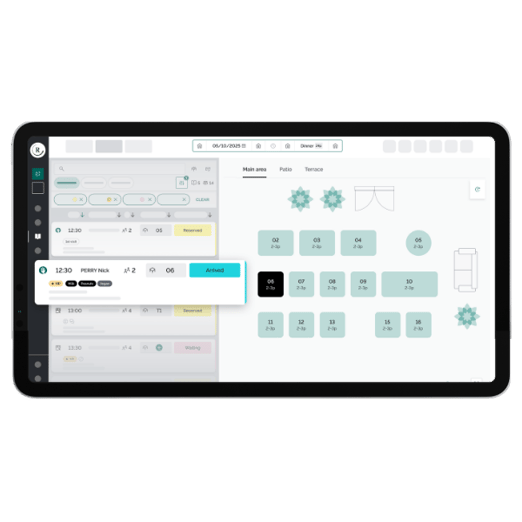
TheFork Manager is a comprehensive, all-in-one restaurant management system that combines a powerful booking app with access to TheFork, one of Europe's largest diner marketplaces. It is designed to help restaurants streamline operations, reduce no-shows, and actively attract new customers.
Best for
- Restaurants of all sizes, seeking both operational efficiency and growth.
- Venues wanting to fill empty tables during off-peak periods.
- Businesses looking for an integrated booking and marketing solution.
Standout Features
- Access to millions of diners on TheFork marketplace.
- Advanced no-show protection with deposits and card capture.
- Seamless integration with Google Reserve.
- Powerful promotional tools like special offers and events.
- Save money and streamline payments directly at the table with TheFork Pay.
- Guest CRM and feedback management tools.
- Detailed analytics and performance reporting.
Pricing
- Flexible, tiered subscription plans to suit different needs and budgets.
Pros & Cons
- Pros: The unique combination of a powerful management system and a huge diner marketplace, strong focus on filling tables, and excellent no-show reduction tools.
- Cons: To get the full value, restaurants need to be engaged with the marketing and promotional tools, which requires some ongoing management.
Notable Integrations
- Integrates with a growing list of major POS systems to link booking data with sales.
Who Should Pick It
- TheFork Manager is the ideal choice for restaurants that want more than just a booking tool. It's for venues that are actively looking to grow their business, attract new diners, and use a single, integrated platform to manage both their bookings and their marketing.
Empty tables and ever-increasing costs?

2. DesignMyNight (Collins)

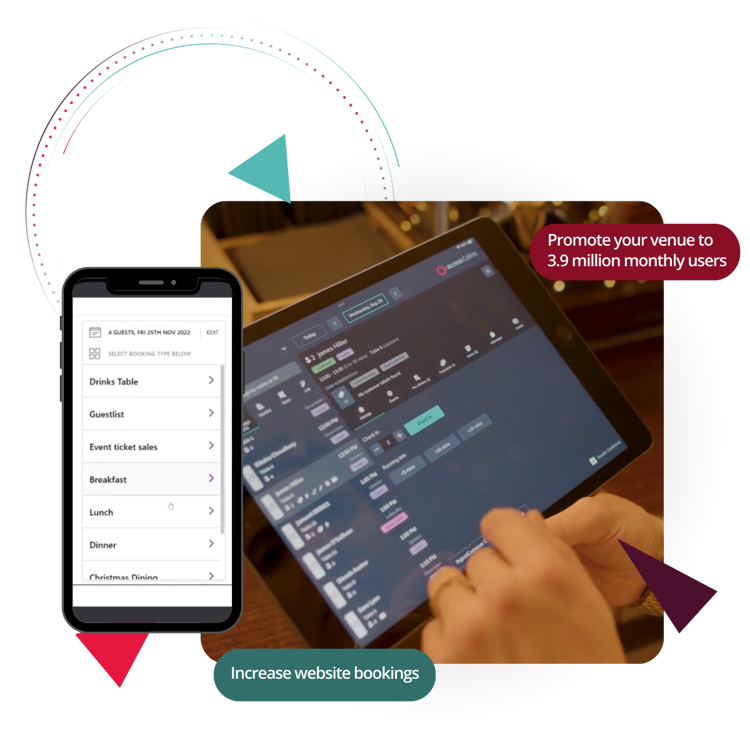
Access Collins is the powerful booking system behind the popular UK discovery platform, DesignMyNight. It's a robust solution tailored for the dynamic UK hospitality scene, particularly for venues that are as much about the experience as the food.
Best for
- Pubs, bars, and experience-led venues.
- Restaurants that host frequent ticketed events.
- Businesses wanting to tap into a large, UK-based audience.
Standout Features
- Direct integration with the DesignMyNight marketplace.
- Strong pre-payment and ticketing features for events.
- Manages standard reservations, enquiries, and pre-orders.
- UK-based support.
- Good for managing large group bookings.
Pricing
- Subscription-based model, with pricing typically starting from a set monthly fee per site.
Pros & Cons
- Pros: Excellent for event-heavy venues, provides great visibility on a popular UK platform, strong feature set for pre-orders.
- Cons: The primary focus is on its own marketplace, offering less integration with other global discovery channels; it can be feature-heavy if you only need simple table reservations.
Notable Integrations
- Integrates with various EPOS systems and payment solutions popular in the UK.
Who Should Pick It
- This is an ideal choice for high-energy UK venues where events, group bookings, and a vibrant atmosphere are central to the brand. It's especially powerful for businesses in major cities looking to attract a nightlife-oriented crowd.
3. OpenTable

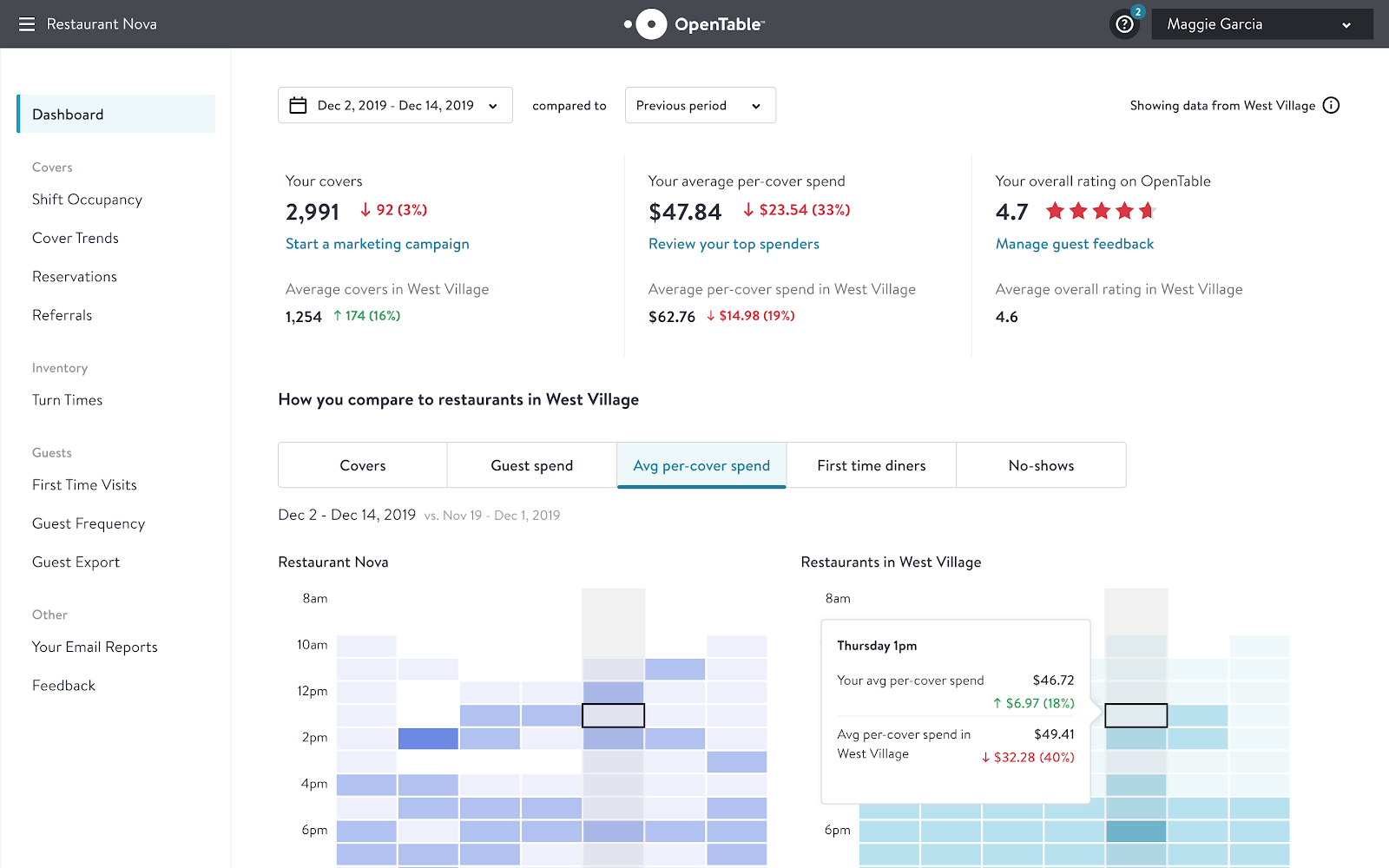
As one of the world's most recognised restaurant reservation platforms, OpenTable offers restaurants access to a vast global network of diners. It provides a comprehensive suite of tools for managing reservations, table availability, and guest feedback.
Best for
- Restaurants in tourist-heavy locations.
- Venues seeking maximum brand visibility.
- Established restaurants wanting a powerful, feature-rich system.
Standout Features
- Access to a massive global diner marketplace.
- Integration with Google Reserve.
- Robust reporting and analytics.
- Guest feedback and reputation management tools.
- Deposits and card capture to reduce no-shows.
Pricing
- Typically a hybrid model with a monthly subscription fee plus per-cover fees for bookings from the OpenTable network.
Pros & Cons
- Pros: Unmatched brand recognition and diner network, powerful marketing features, tried-and-tested platform.
- Cons: The per-cover fee model can become very expensive for high-volume venues, making costs less predictable; guest data is often shared with the platform, offering less direct ownership.
Notable Integrations
- Integrates with a wide range of POS systems, including Lightspeed and Square.
Who Should Pick It
- OpenTable is a strong choice for restaurants that prioritise maximising their reach and are located in areas with high tourist traffic. It's best suited for businesses with a healthy budget that can accommodate the per-cover fee structure.
4. Quandoo

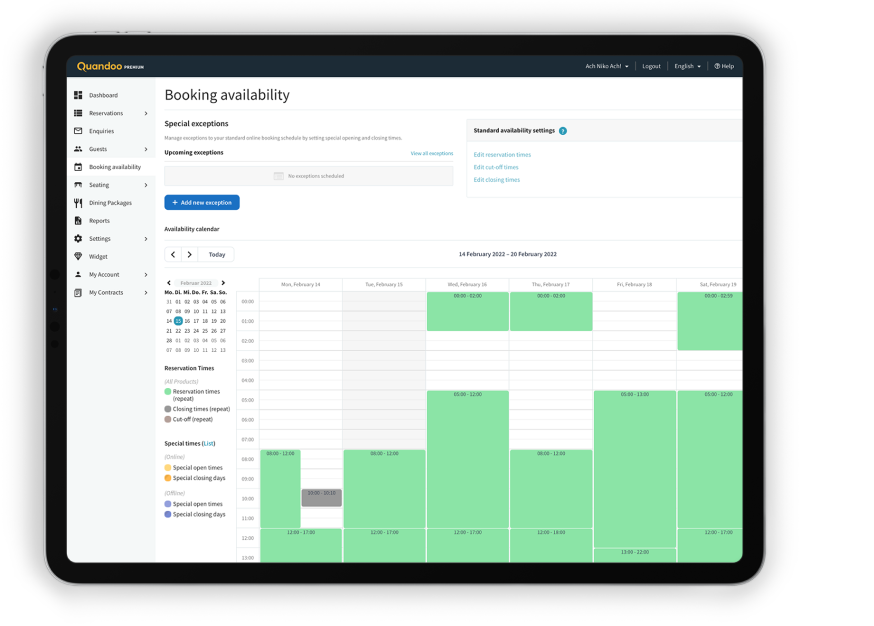
Quandoo is a fast-growing international booking platform with a significant presence in the UK. It focuses on connecting diners with local restaurants and offers a reliable reservation management system for venues of all sizes.
Best for
- Independent restaurants in major UK cities.
- Venues looking for a balance between a booking system and marketplace exposure.
- Restaurants wanting to attract a diverse, international clientele.
Standout Features
- Visibility on the Quandoo booking marketplace.
- Table management with a digital floor plan.
- Guest CRM to store customer data and preferences.
- Tools for special offers and promotions.
- Review management features.
Pricing
- Often uses a model combining a subscription fee with optional per-cover fees for marketplace bookings.
Pros & Cons
- Pros: Good value proposition, growing diner network in the UK, and user-friendly interface.
- Cons: Lacks some of the advanced CRM and marketing automation features of more premium systems; marketplace visibility is strong but not as extensive as the largest global players.
Notable Integrations
- Offers integrations with several major POS systems.
Who Should Pick It
- Quandoo is a solid all-round choice for independent restaurants that want a reliable booking system with the added benefit of marketing exposure, without the high costs of some larger platforms.
5. ResDiary

ResDiary is a customisable reservation management system, popular with both independent restaurants and larger groups. It is known for its commission-free model, allowing restaurants to take unlimited bookings for a flat monthly fee.
Best for
- High-volume restaurants wanting predictable costs.
- Venues with complex table management needs.
- Restaurants focused on building their direct booking channel.
Standout Features
- Commission-free bookings.
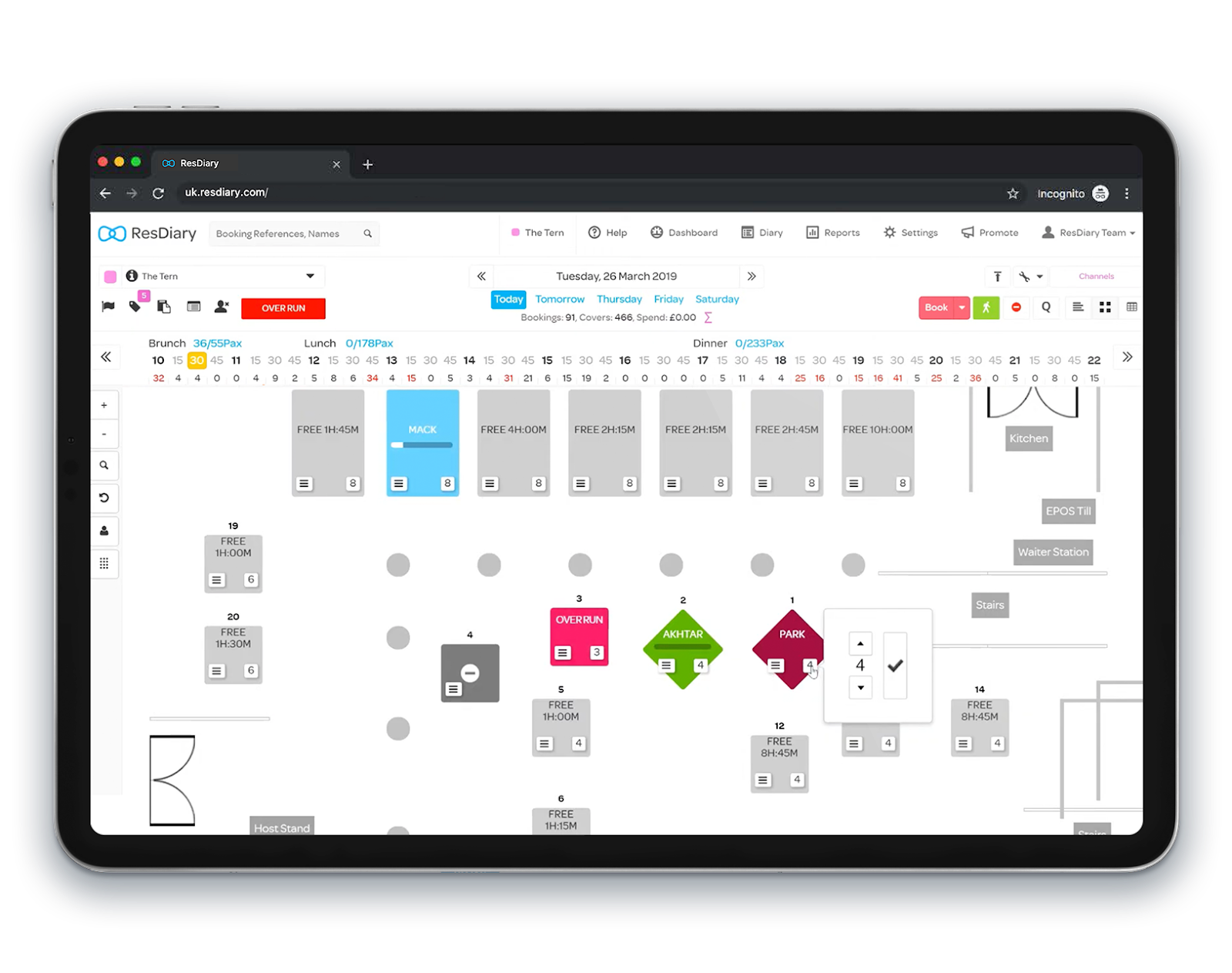
- Advanced table management and yield optimisation tools.
- Ability to take deposits and capture card details.
- Guest CRM and marketing features.
- Phone and event enquiry management.
Pricing
- Subscription-based model with different tiers, offering predictable monthly costs.
Pros & Cons
- Pros: Flat-fee model is excellent for budget forecasting, highly customisable, strong focus on direct bookings.
- Cons: Relies almost entirely on the restaurant's own marketing efforts to drive traffic, as its consumer-facing discovery platform is not as prominent; it can have a steeper learning curve due to its extensive features.
Notable Integrations
- Offers a wide range of POS and third-party integrations.
Who Should Pick It
- ResDiary is ideal for established restaurants with strong marketing and a high volume of bookings, who want to maximise their direct revenue and avoid per-cover fees.
6. SevenRooms

SevenRooms is an enterprise-level guest experience and retention platform that goes beyond a simple booking app. It's a data-driven system designed to help operators manage the entire guest journey, from marketing to on-site experience and post-visit feedback.
Best for
- Large restaurant groups and enterprise hospitality clients.
- Fine dining venues focused on building detailed guest profiles.
- Businesses that want a single platform for CRM, marketing, and reservations.
Standout Features
- Deep guest CRM with automated tagging and profiling.
- Marketing automation for email and SMS campaigns.
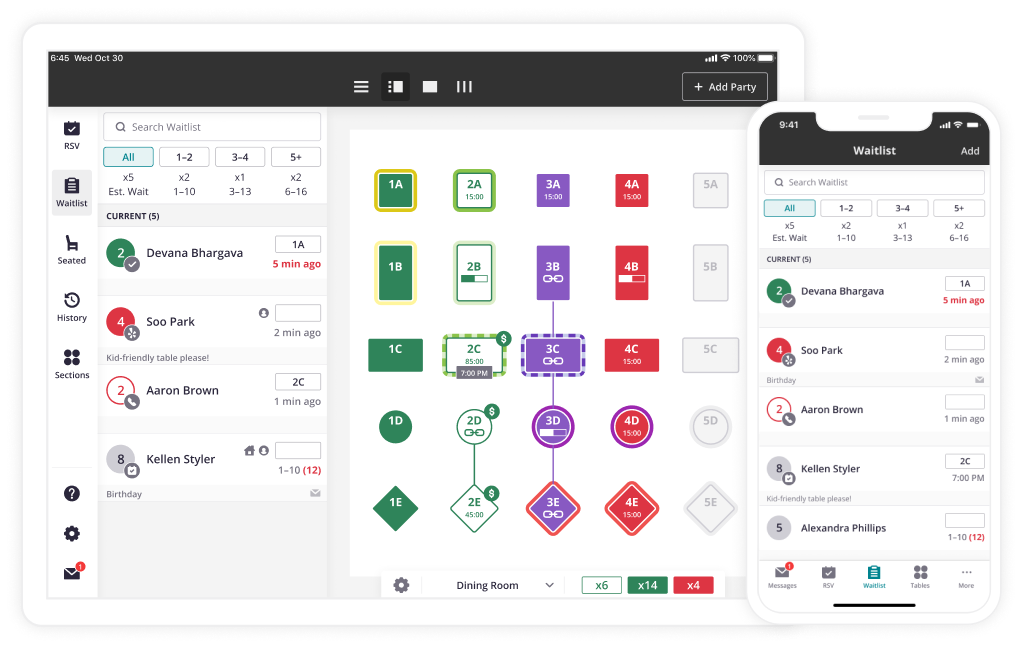
- Manages reservations, waitlists, and events.
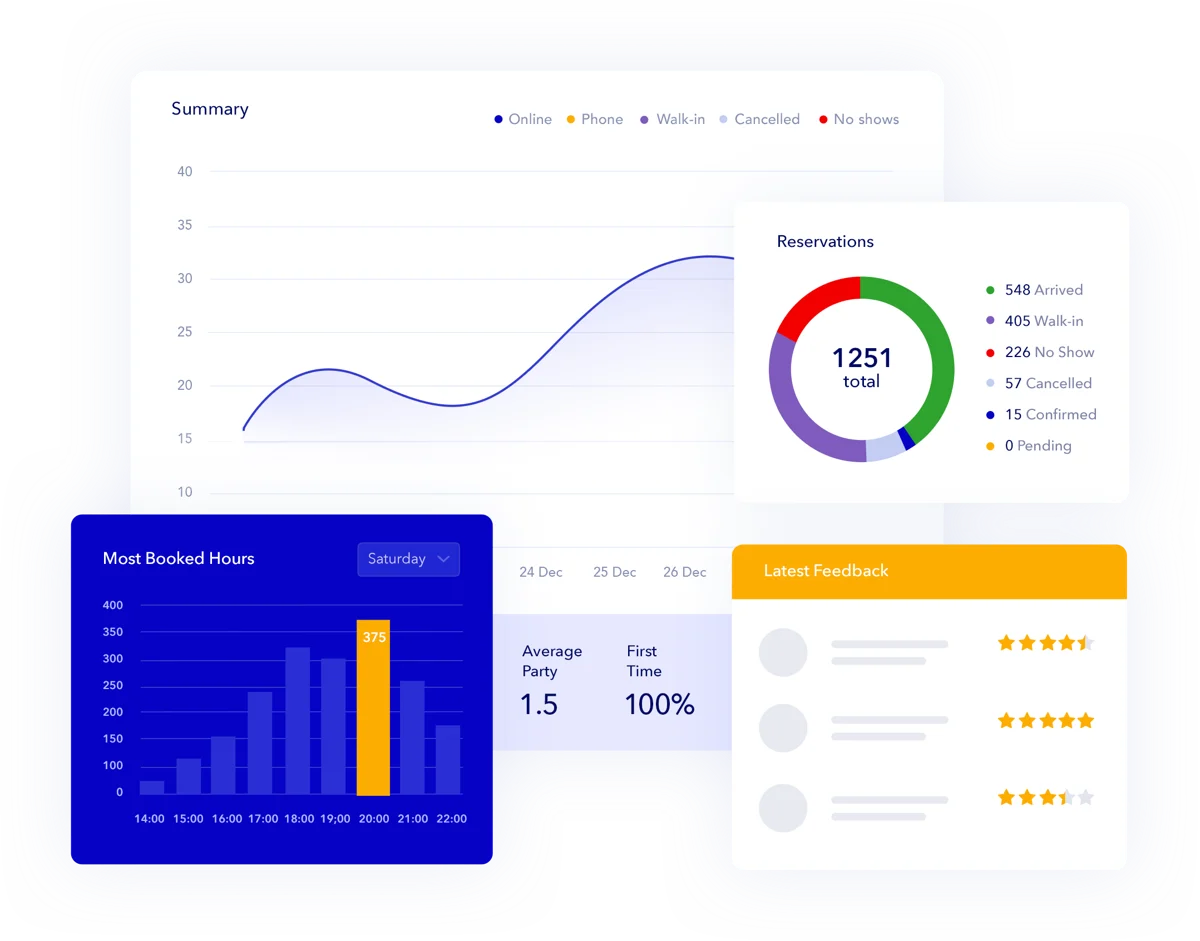
- Powerful analytics and guest data reporting.
- Direct integrations with Google, Instagram, and more.
Pricing
- Premium subscription model; contact for a quote.
Pros & Cons
- Pros: Unmatched in its depth of guest data and CRM capabilities, excellent for building direct guest relationships, and highly scalable.
- Cons: Pricing and complexity can be prohibitive for small, independent restaurants; it is a closed ecosystem that does not offer the benefit of a public diner marketplace to attract new guests.
Notable Integrations
- An extensive list of integrations with major POS, PMS, and marketing platforms.
Who Should Pick It
- SevenRooms is the top choice for sophisticated hospitality groups that have the resources to invest in a powerful, data-centric platform and are focused on owning the guest relationship directly.
7. Tablein

Tablein is a simple, modern, and affordable restaurant reservation system designed for independent restaurants and cafes. It focuses on providing a clean, user-friendly booking experience for both the restaurant and its guests, without unnecessary complexity.
Best for
- Small, independent restaurants and cafes.
- Venues on a tight budget.
- Owners who want a simple, easy-to-use system.
Standout Features
- Simple and intuitive booking management.
- Website booking widget and Facebook app.
- Automated email confirmations.
- A guest database for collecting customer information.
- Prepayment and deposit options are available.
Pricing
- Affordable subscription-based model with a free trial available.
Pros & Cons
- Pros: Very easy to set up and use, budget-friendly pricing, clean and modern interface.
- Cons: Lacks the marketing power of a connected diner marketplace, meaning it won't help you attract new customers; has fewer advanced features and integrations compared to larger systems.
Notable Integrations
- Offers key integrations for a simple setup, including a WordPress plugin and links to payment gateways.
Who Should Pick It
- Tablein is perfect for small restaurants that primarily need a reliable tool to manage direct bookings from their existing customers and website traffic, and who value simplicity over an extensive feature set.
Comparison Table
|
App |
Best For |
Market |
Deposits/ |
POS Integrations |
Typical Pricing Model |
Notable UK Strength |
|---|---|---|---|---|---|---|
|
TheFork Manager |
All types of restaurants |
Yes (European Leader) |
Yes |
Yes |
Tiered Subscription |
The combination of marketplace & software |
|
DesignMyNight |
Pubs & Events |
Yes (UK Focus) |
Yes |
Yes |
Subscription |
Strong in the events & nightlife scene |
|
OpenTable |
Tourist Locations |
Yes (Global) |
Yes |
Yes |
Subscription + Per-Cover |
High brand recognition |
|
Quandoo |
Independent Restaurants |
Yes (International) |
Yes |
Yes |
Subscription (+ Optional Per-Cover) |
Good balance of features & reach |
|
ResDiary |
High-Volume Venues |
No |
Yes |
Yes |
Subscription |
Commission-free, predictable costs |
|
Seven |
Large Groups/Fine Dining |
No |
Yes |
Yes |
Premium Subscription |
Unmatched guest CRM capabilities |
|
Tablein |
Small Cafes/Bistros |
No |
Yes |
Limited |
Low-Cost Subscription |
Simplicity and ease of use |
How to Choose the Right Booking App
Align with Concept & Service Model
The right app for a fine dining restaurant is different from the one for a busy pub. Consider your service style. Do you need to manage complex table configurations, take pre-orders for large groups, or sell tickets for special events? Choose a system that matches your operational reality.
Data & Ownership
Under GDPR, you are the data controller. Ensure the app allows you to easily manage guest data, record marketing consent, and export your data if you ever decide to switch systems. Full ownership and portability of your guest data is a critical long-term consideration.
Fees & Margin Impact
Model the costs carefully. If you are a high-volume restaurant, a flat subscription fee will likely be more cost-effective than a per-cover model. Calculate how much revenue you are losing to no-shows and determine if the cost of a system with deposit features will provide a positive return.
Go-Live Plan
Choosing the app is only the first step. Have a clear plan for implementation: this includes scheduling time for staff training, deploying the booking widget on your website, updating your Google and social media profiles with the new booking link, and migrating any existing guest data.
Implementation Timeline
7-Step Quick-Start
- Create Your Floor Plan: Digitally map out your tables and seating areas.
- Set Your Booking Rules: Define your party size limits, opening hours, and how far in advance guests can book.
- Configure Deposits: Set up your no-show policy and connect your payment gateway (e.g., Stripe).
- Add the Widget to Your Site: Copy the provided code snippet and embed the booking widget on your website's reservation page.
- Enable Google Integration: Activate the 'Reserve with Google' feature to take bookings directly from search and maps.
- Customise Your Comms: Edit the templates for your automated confirmation and reminder emails.
- Run a Test Booking: Make a test reservation to ensure the entire process is smooth from start to finish.
Launch Assets
Ensure your key digital touchpoints are updated.
- Add the "Reserve" action button to your Instagram and Facebook profiles.
- Update the "Reserve a table" button on your Google Business Profile to link directly to your new booking page.
- Create simple email/SMS templates to announce the new, easier way to book to your existing customers.
Measuring Success
Core KPIs
- Covers by Channel: Where are your bookings coming from? (e.g., your website, the marketplace, Google).
- No-Show Rate: Has this percentage decreased after implementing deposits?
- Deposit Acceptance: What percentage of users are completing bookings with a deposit?
- RevPASH: Are you generating more revenue from your available seats?
- Repeat Guest Rate: Is the system helping you build loyalty?
Optimisation Ideas
Use your data to make improvements. Tweak your table pacing to smooth out service, run promotions during historically quiet windows, use guest tags to identify and reward your VIPs, and ensure your automated reminders are switched on and effective.
TheFork Manager for UK Venues
Visibility + Direct Control
TheFork Manager offers a unique dual advantage. You get a powerful system to manage all your bookings with your own rules, while also appearing on TheFork network—one of the UK's leading platforms for diners actively looking to book a table.
No-Show Reduction
With a comprehensive suite of tools, including deposits, card capture, automated reminders, and a clear cancellation policy framework, TheFork Manager is designed to protect your revenue and significantly reduce the costly impact of no-shows.
Marketing & Integrations
The platform is more than a booking tool; it's a marketing engine. It integrates directly with Google Reserve a Table, provides easy-to-install website widgets, and offers promotional tools to fill empty tables. The review booster helps you gather more feedback, which in turn improves your visibility.
Results to Expect
By leveraging the full power of TheFork Manager, restaurants can expect a tangible transformation in their performance, driven by a synergistic ecosystem of tools.
You should anticipate a significant increase in your total volume of covers, fueled by the unparalleled visibility your venue gains on TheFork's active diner marketplace, unlocking a new stream of potential customers you wouldn't otherwise reach.
This newfound revenue is then protected by a powerful suite of no-show reduction tools, which converts tentative bookings into confirmed attendance. Finally, the platform helps turn these new diners into loyal regulars through its integrated CRM and guest feedback tools, fostering relationships that lead to a higher and more profitable rate of repeat business.
FAQs
What’s the Difference Between a Booking App and a Full Reservation System?
The terms are often used interchangeably. Generally, a "booking app" can refer to the guest-facing part, while a "reservation system" is the full back-end platform the restaurant uses to manage everything from tables to guest data.
Do I Need to Take Deposits to Reduce No-Shows in the UK?
While not mandatory, taking deposits or capturing credit card details is the single most effective strategy to reduce no-shows. It has become a standard and accepted practice in the UK, especially for peak times and larger groups.
Which Booking Apps Integrate with My POS?
Most major booking apps, including TheFork Manager, OpenTable, and ResDiary, offer integrations with leading UK POS systems like Lightspeed, Square, and Toast. Always check for specific compatibility before choosing.
How Much Do Restaurant Booking Apps Cost in the UK?
Costs vary widely, from low-cost monthly subscriptions (around £20-£50/month for simple systems) to premium platforms that can cost several hundred pounds per month, plus potential per-cover fees for marketplace bookings.
Can I Keep Ownership of Guest Data and Stay GDPR-Compliant?
Yes. Choose a reputable system that explicitly states it is GDPR-compliant and allows you to easily export your guest data. This ensures you maintain ownership and can use your data for your own marketing efforts.
How Fast Can We Go Live and Migrate from Another System?
Most modern cloud-based systems can be set up and go live in under an hour. Migrating guest data from another system may take longer and often requires support from your new provider to ensure a smooth transition.
Do Booking Apps Help with Google/Instagram Reservations?
Yes, the best booking apps offer direct integrations with "Reserve with Google," allowing customers to book without leaving the search results page. You can also add a booking link or action button to your Instagram profile.
What KPIs Should I Track After Switching Systems?
The most important KPIs to track are your no-show rate (to see if it has improved), your booking source (to understand where customers are coming from), and your table turnover rate (to see if you are operating more efficiently).