

What Are Restaurant No-Shows?
A restaurant no-show is when a customer makes a reservation but fails to arrive without cancelling or notifying the restaurant. It's a costly problem for the UK hospitality sector.
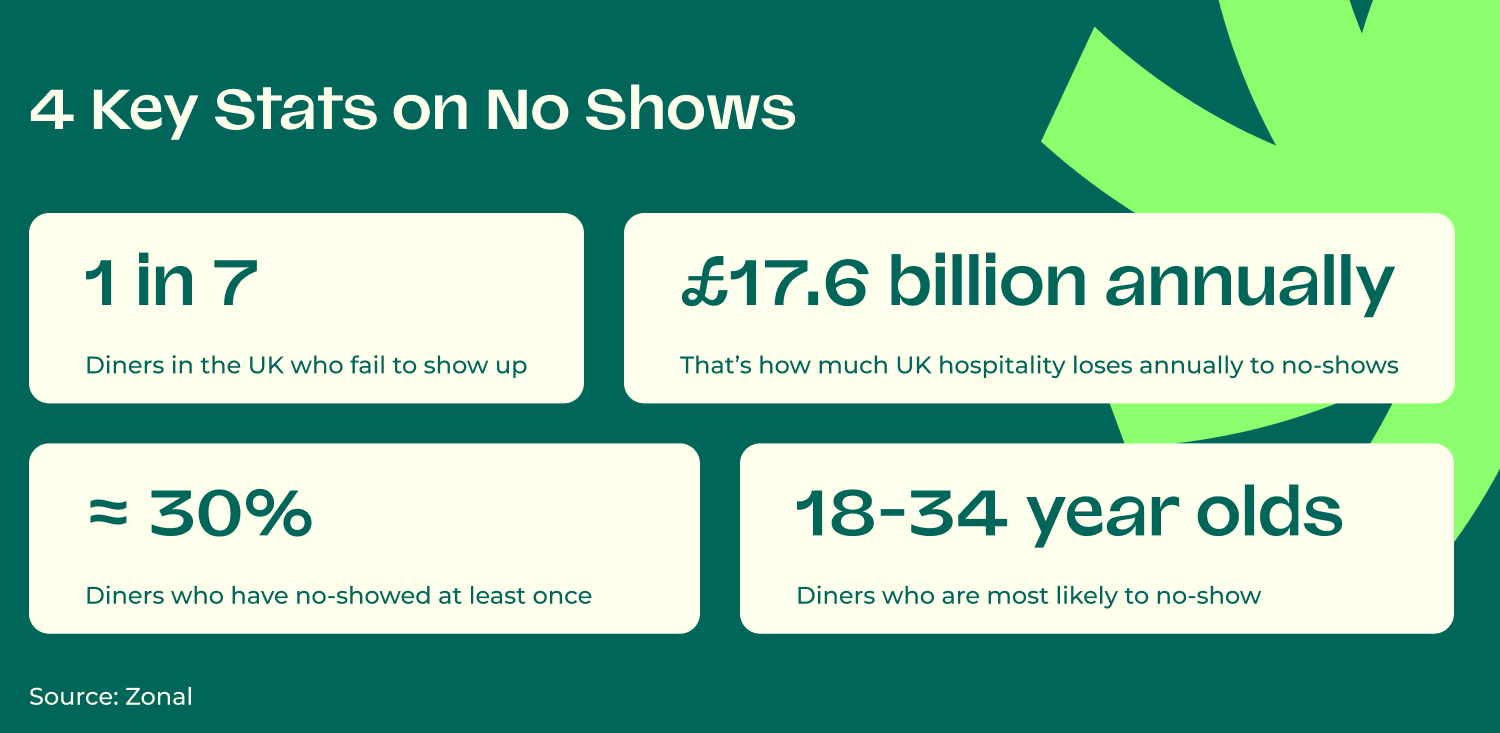
According to recent data by Zonal, a leading hospitality technology provider, one in seven diners (around 14%) fails to show up for their booking, contributing to an estimated £17.6 billion in lost revenue annually.
This issue doesn't just affect fine-dining establishments; it impacts restaurants of all sizes, from small independent bistros to large multi-site groups, putting a significant strain on their profitability.
Why Do Restaurant No-Shows Happen?
Understanding the reasons behind a restaurant reservation no-show is the first step to combating it. The causes are often a combination of factors:
🧠Forgetfulness: Many customers simply forget they made a booking, especially if it was made weeks in advance.
📅Sudden Change of Plans 📅: Unforeseen circumstances, from a personal emergency to a last-minute work commitment, can prevent a guest from attending.
📱Poor Communication: If a restaurant doesn't send clear confirmation details or timely reminders, it's easy for a reservation to slip through the cracks.
🤷No Perceived Commitment: Without a clear cancellation policy or a small financial commitment like a deposit, some customers may not feel obligated to honour their booking.
Impact of No-Shows on Restaurant Profitability
The financial toll of no-shows is staggering. As Zonal reports, the issue costs the UK industry £17.6 billion per year. For an individual venue, this can mean losing between 5% and 20% of their monthly revenue.
The problem is particularly prevalent among the 18-34 age group, a key demographic for many restaurants. The impact goes beyond just an empty table; it creates a cascade of operational and financial problems, including:
📍Food Waste: Ingredients are purchased and prepped based on expected covers, leading to significant waste when guests don't arrive.
📍Staffing Costs: Rotas are planned for a full restaurant. Overstaffing during a service with multiple no-shows means you are paying staff to wait for customers who never materialise.
📍Lost Opportunity: An empty reserved table not only generates zero revenue, but it also prevents you from seating a walk-in customer who could have taken that spot.
12 Proven Strategies to Reduce Restaurant No-Shows
1. Activate Credit Card Guarantees: The Most Effective Method
Requesting credit card details to secure a booking is the single most effective way to reduce no-shows.
It creates a clear psychological and financial commitment from the guest. If they fail to show up, you can charge a pre-agreed fee, compensating you for the lost revenue. This simple step transforms a casual booking into a confirmed one.
🔎Micro-Scenario: A table of four books for a peak Saturday evening service. By providing their card details, they are far more likely to either attend or cancel in advance, allowing you to rebook the table.
📢Actionable Steps:
- Choose a reservation system with a secure, PCI-compliant card capture feature.
- Define a clear no-show fee and cancellation window (e.g., £20 per person for cancellations within 24 hours).
- Communicate this policy clearly and transparently during the booking process.
- Data from TheFork shows that activating a credit card guarantee decreases no-shows by an impressive 65%.
⭐Key Takeaway: A small commitment from the guest provides significant financial security for the restaurant, acting as the strongest deterrent against no-shows.
2. Send Automated Reservation Reminders
Simple forgetfulness is a leading cause of no-shows. An automated reminder via email or SMS is a simple, low-cost, and highly effective way to jog a customer's memory and confirm their intention to dine. This proactive communication shows professionalism and significantly reduces accidental no-shows.
🔎Micro-Scenario: A customer who booked a table two weeks ago receives an SMS reminder the day before their visit. This prompts them to either confirm or cancel, giving the restaurant time to fill the table if needed.
📢Actionable Steps:
- Use a system like TheFork Manager to set up free, automated email and SMS reminders.
- Schedule reminders to be sent 24-48 hours before the reservation time.
- Include all key details in the reminder: date, time, party size, and a simple one-click option to cancel or confirm.
⭐Key Takeaway: Automation ensures no customer is forgotten, turning a manual chore into a powerful and reliable no-show prevention tool.
3. Create a Clear Cancellation Policy
A formal cancellation policy sets clear expectations for your guests from the moment they book. It communicates that a reservation is a two-way commitment and outlines the consequences of a late cancellation or a no-show. This professionalism encourages customers to take their booking more seriously.
🔎Micro-Scenario: Your website and booking confirmation email clearly state that cancellations within 12 hours of the booking time will incur a £15 per person fee. A guest knows the rules up front and is more likely to cancel in good time.
📢Actionable Steps:
- Decide on a reasonable cancellation window (e.g., 12, 24, or 48 hours).
- Determine a fair fee that helps cover your potential losses.
- Display your policy clearly on your website, in your booking widget, and in your confirmation emails.
- Train your staff to communicate the policy politely if taking phone bookings.
⭐Key Takeaway: A clear and well-communicated policy establishes professionalism and encourages responsible booking behaviour from your guests.
4. Encourage Prepayment for High-Demand Bookings
For special events, tasting menus, or highly sought-after bookings (like Christmas Day or Valentine's Day), asking for a full or partial prepayment is a growing and effective strategy. This "ticketing" model completely eliminates the financial risk of no-shows, as the revenue is secured in advance.
🔎Micro-Scenario: A restaurant offers a special New Year's Eve tasting menu. By selling it as a pre-paid ticketed event, they guarantee their revenue for the night and can purchase ingredients with absolute confidence.

📢Actionable Steps:
- Identify high-demand dates or experiences suitable for a prepayment model.
- Use a booking system that can securely process prepayments.
- Clearly communicate that the booking is for a pre-paid experience.
- Define a refund policy for cancellations made well in advance.
⭐Key Takeaway: Prepayments transform a reservation into a guaranteed sale, providing the ultimate financial security for your most valuable services.
5. Allow Fast, Flexible Cancellation or Rescheduling
The easier you make it for a customer to cancel, the more likely they are to do it. This may sound counterintuitive, but it's exactly what you want. A cancelled table can be rebooked; an empty table from a no-show cannot. A simple, one-click cancellation process is a win-win.
🔎Micro-Scenario: A guest's plans change last minute. Instead of just not showing up, they click the "Cancel" link in their reminder email. The table instantly becomes available online and is rebooked by someone on your waiting list.
📢Actionable Steps:
- Ensure your confirmation and reminder emails include a direct, one-click link to cancel or modify a booking.
- Avoid forcing customers to call to cancel, as this friction can lead to them simply not bothering.
- Frame it positively: "Plans changed? No problem! Click here to easily cancel or reschedule your booking."
⭐Key Takeaway: A frictionless cancellation process is your best defence against a no-show, as it gives you the crucial opportunity to resell your table.
6. Improve Pre-Arrival Communication
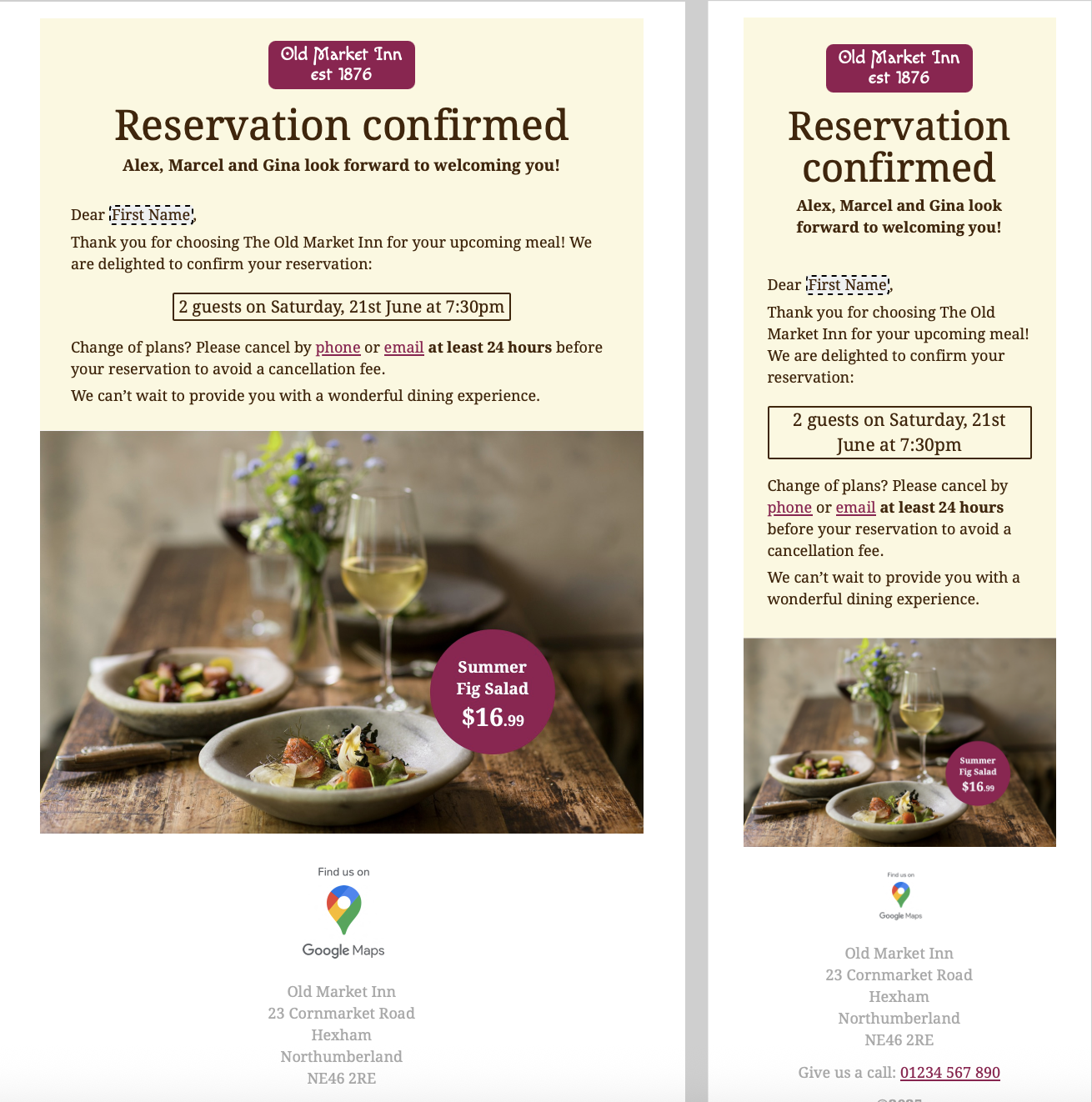
Good communication builds a relationship with your guests before they even arrive, making them feel more connected and less likely to no-show. This goes beyond just a single reminder. A well-timed confirmation email with all the right details sets a professional tone from the start.
🔎Micro-Scenario: A guest books a table and immediately receives a confirmation email that includes a map, parking information, and a note about your smart-casual dress code. They feel well-informed and confident about their upcoming visit.
📢Actionable Steps:
- Send an instant confirmation email the moment a booking is made.
- Include all essential details: date, time, party size, address, and a link to your menu.
- Add helpful information like parking tips or public transport links.
- Use the confirmation as an opportunity to build excitement, perhaps with a great photo of your signature dish.
⭐Key Takeaway: Proactive and helpful communication makes your guests feel valued and prepared, strengthening their commitment to their booking.
7. Use a Waiting List to Fill Last-Minute Gaps
Even with the best strategies, last-minute cancellations happen. A digital waiting list is your safety net, allowing you to capture demand even when you're fully booked and instantly fill any tables that become available.
🔎Micro-Scenario: Your restaurant is fully booked for Saturday night. A potential customer joins the digital waiting list. At 6 PM, a table of two cancels. The system can automatically notify the first person on the waiting list who books the table, saving you from lost revenue.
📢Actionable Steps:
- Choose a reservation system, like TheFork Manager, that includes a digital waiting list feature.
- Prominently display the "Join Waiting List" option on your booking widget when you are fully booked.
- Configure the system to automatically or manually notify waiting guests when a table opens up.
⭐Key Takeaway: A waiting list turns a "fully booked" status into an opportunity, ensuring you can maximise your occupancy even when plans change.
8. Identify Customer Reliability: TheFork Reliability Score
Not all bookings carry the same risk. A system that tracks customer booking history can help you identify guests who have a history of no-shows, allowing you to take proactive measures. This data-driven approach helps you manage risk intelligently.
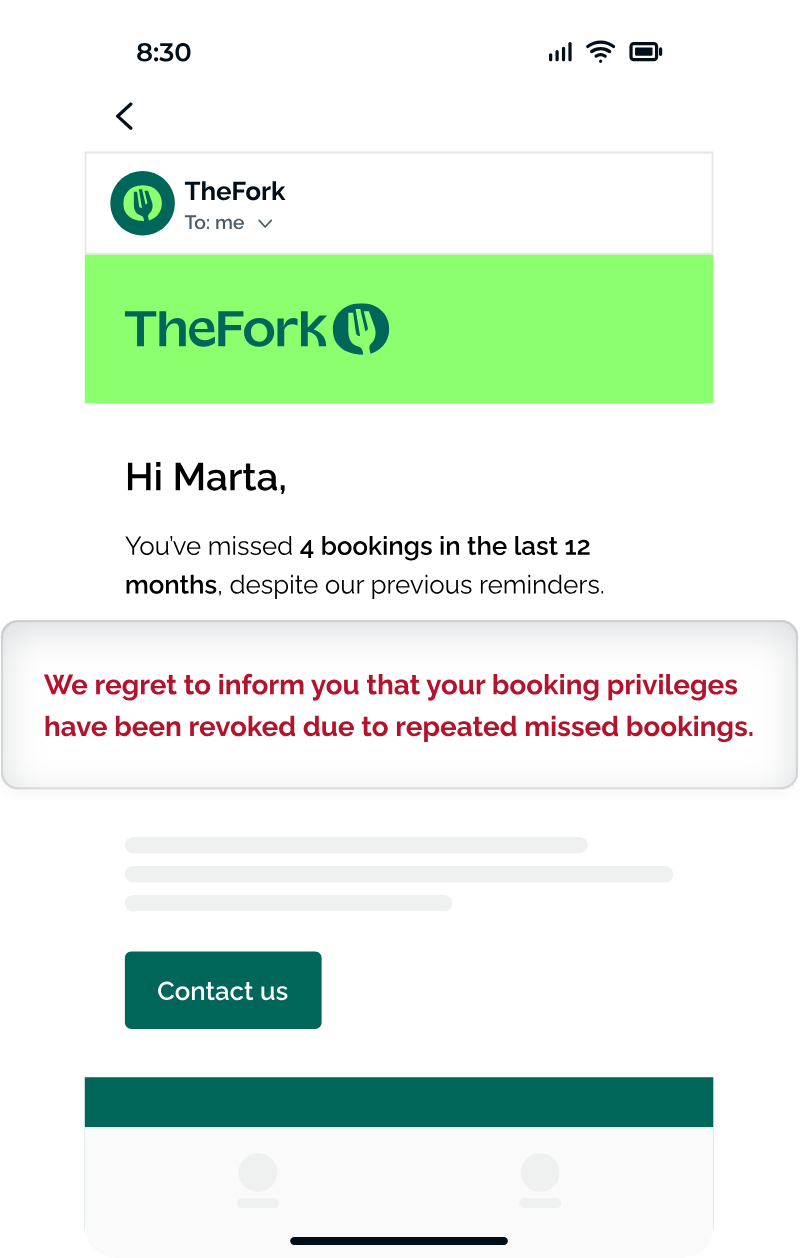
🔎Micro-Scenario: A booking comes in from a guest with a low reliability score (indicating past no-shows). Your front-of-house manager can make a polite confirmation call the day before to personally confirm their attendance.
📢Actionable Steps:
- Use a platform like TheFork Manager that provides a simple, colour-coded reliability index for diners.
- Train your team to pay special attention to bookings with a low reliability score.
- For these high-risk bookings, consider making a personal confirmation call in addition to automated reminders.
⭐Key Takeaway: Understanding guest history allows you to move from a generic to a targeted no-show prevention strategy, focusing your efforts where they are needed most.
9. Reduce Booking Friction: Optimised Booking Journey
The booking process itself should be as fast and simple as possible. Every unnecessary field you ask a customer to fill in, and every extra click they have to make, is a potential point for them to abandon the booking. A smooth, optimised journey leads to higher conversion rates.
🔎Micro-Scenario: A customer on their mobile wants to book a table. Your booking widget is clean, loads instantly, and only asks for the essential information: name, number of guests, phone, and email. The process takes them less than 30 seconds.
📢Actionable Steps:
- Ensure your "Book a Table" CTA is highly visible on your website.
- Review your booking form and remove any non-essential fields. Do you really need their full address?
- Make sure your booking widget is mobile-first and loads quickly.
- After the booking is made, display a clear confirmation screen with all the key details.
⭐Key Takeaway: A fast and effortless booking process not only increases conversions but also creates a professional first impression.
10. Offer Rewards for Honouring Bookings
You can positively reinforce good behaviour. Instead of punishing no-shows, consider rewarding guests who consistently honour their bookings. This mustn't be a direct financial incentive for a single booking, but rather part of a broader loyalty strategy.
🔎Micro-Scenario: A guest who has honoured their last five bookings automatically receives a "VIP" tag in your CRM, giving them access to priority booking for special events or a complimentary glass of prosecco on their next visit.
📢Actionable Steps:
- Use your CRM to track guest visit history.
- Create a simple system to identify your most reliable and loyal customers.
- Offer small, unexpected perks to these guests to show your appreciation.
- Frame it as a reward for their loyalty, not just for showing up.
⭐Key Takeaway: Rewarding good behaviour can be a positive and effective way to build a loyal community of reliable customers.
11. Train Staff to Confirm Group Bookings
Large group bookings represent a significant amount of potential revenue, but also a significant risk. A no-show from a table of ten can ruin a night's profitability. For these high-value bookings, an automated reminder is often not enough.
🔎Micro-Scenario: A booking for a party of 12 is made for a Saturday night. 48 hours before, your front-of-house manager makes a personal phone call to the organiser to confirm the final numbers and any dietary requirements.
📢Actionable Steps:
- Flag all bookings over a certain size (e.g., 6+ people) for a manual follow-up.
- Assign a team member to make a polite confirmation call 1-2 days before the booking.
- Use the call as an opportunity to build rapport and ask if they are celebrating a special occasion.
- Always combine this with a credit card guarantee for large groups.
⭐Key Takeaway: A personal touch for high-value bookings provides an extra layer of security and demonstrates excellent customer service.
12. Use TheFork Manager Tools to Reduce No-Shows to as Little as 0.8%
By combining multiple strategies into a single, integrated platform, it's possible to dramatically reduce your no-show rate.
TheFork Manager equips you with all the necessary tools - from credit card guarantees and automated reminders to a customer reliability index and a digital waiting list.
By using these features in concert, our partner restaurants have been able to achieve an impressively low no-show rate of just 0.8%, turning a major industry problem into a manageable operational task.
🔎Micro-Scenario: A restaurant uses TheFork Manager to activate a card guarantee for all weekend bookings, sends automated SMS reminders to all guests, and uses the waitlist to instantly fill a last-minute cancellation, ensuring a fully booked and profitable service.
📢Actionable Steps:
- Activate the credit card guarantee feature as your first line of defence.
- Ensure automated email and SMS reminders are switched on for all bookings.
- Train your team to use the customer reliability index and the digital waitlist.
- Use the analytics dashboard to monitor your no-show rate and see the impact of these tools in real-time.
⭐Key Takeaway: A comprehensive, multi-layered technology solution like TheFork Manager is the most powerful way to protect your revenue and virtually eliminate the problem of no-shows.
How TheFork Manager Helps Restaurants Reduce No-Shows
TheFork Manager offers a complete, multi-layered defence against the restaurant no-show problem, integrating all the most effective strategies into a single, easy-to-use platform.
It starts by securing your bookings with fully compliant credit card guarantees and deposit options, which have been proven to reduce no-shows by 65%. This is backed up by free, automated email and SMS reminders that ensure your guests never forget a booking.
The system also empowers you with data, providing a unique customer reliability index to help you spot potential risks in advance. And for when cancellations do happen, the digital waiting list allows you to fill those empty tables in an instant. It’s a comprehensive solution designed to protect your revenue and maximise your occupancy.
Empty tables and ever-increasing costs?

FAQ: Restaurant No-Show Prevention
What Is a Restaurant No-Show?
A restaurant no-show is when a customer with a reservation fails to arrive for their booking without giving any prior notice of cancellation.
What Is an Acceptable No-Show Rate in the UK?
While the industry average can be as high as 14% (1 in 7 diners), a well-managed restaurant using prevention tools aims for a no-show rate below 5%. Top-performing restaurants using comprehensive systems can reduce this to under 1%.
How Much Do Restaurant No-Shows Cost UK Businesses?
According to data from Zonal, no-shows are estimated to cost the UK hospitality industry £17.6 billion in lost revenue each year.
What Are the Best Ways to Prevent Restaurant Reservation No-Shows?
The most effective methods are taking credit card guarantees or deposits, sending automated booking reminders via email and SMS, and maintaining clear communication with your guests.
Do Credit Card Guarantees Reduce No-Shows?
Yes, they are extremely effective. Data shows that simply requesting a credit card guarantee can reduce no-shows by as much as 65%, as it creates a financial commitment from the customer.
What Should You Include in a Restaurant Cancellation Policy?
Your policy should clearly state the cancellation window (e.g., 24 hours' notice required) and the fee that will be charged for a late cancellation or a no-show. This must be communicated clearly during the booking process.
Are Prepayments Effective for Reducing No-Shows?
Yes, prepayments (or 'ticketing') are the most effective method as they completely eliminate the financial risk of a no-show. They are best used for special events, tasting menus, or high-demand festive periods.
How Do Booking Reminders Help Reduce No-Shows?
They combat simple forgetfulness, which is one of the leading causes of no-shows. A timely email or SMS reminder gives the customer a chance to either confirm their attendance or cancel in advance, allowing you to rebook the table.
How Does TheFork Manager Help Reduce Restaurant No-Shows?
TheFork Manager provides a complete suite of tools: credit card guarantees, automated email and SMS reminders, a customer reliability index to identify risky bookings, and a digital waiting list to fill last-minute cancellations.
Can Restaurants Charge Customers for No-Shows in the UK?
Yes, provided that the customer has agreed to your cancellation policy and provided their card details for that specific purpose during the booking process. The terms must be clear, fair, and transparent.